
Your First Trip to the Mountains
Every worry. Every challenge. Every answer. No jargon. No fluff. No assumption you know any of this yet.
Get trip updates and exclusive offers straight to your inbox
We know what’s actually stopping you
It’s not that you don’t want to go. It’s not that you can’t afford it. It’s not even that you don’t have time.
It’s that every time you sit down to actually plan a ski trip, you hit a wall of things you don’t know and don’t know how to find out. Which resort? What gear? What if I can’t do it? What if I’m the only one who’s useless? What if I spend a fortune and hate it?
This guide exists to knock down every one of those walls.
We’re not going to tell you skiing is easy. It isn’t, at first. We’re not going to tell you it won’t hurt. It might, a bit. What we are going to do is tell you exactly what the challenges are, why they’re completely normal, and precisely how a well-organised first trip handles every single one of them.
The mountains aren’t reserved for people who already know how to ski.
They never were. By the end of this guide, the planning won’t feel overwhelming. And you’ll probably have decided which trip you’re booking.

“I don’t even know where to start.”
The Worry
I’ve looked at ski trips before and immediately got lost. Resorts, packages, transfer options, half-board versus full-board, which ski school, which area of the mountain is right for beginners. It’s overwhelming. I close the tab and tell myself I’ll do it another time.
How It’s Handled
One booking covers everything: flights, transfers, hotel, breakfast, lift pass, gear hire, lessons, mountain lunch and dinners. There is nothing to assemble. The only decisions you make are which trip length suits you and which dates work. Everything else is handled. You show up at the airport and are looked after from that moment through to your flight home.
This is the most common reason people who want to try skiing haven’t tried skiing. Not cost, not fitness, not fear — overwhelm. The planning barrier is real, and it’s particularly steep if you don’t already have a friend who skis to walk you through it.
The problem with most ski trips is that they sell you components and expect you to assemble them. You find flights. You book a hotel. You separately arrange a ski school. You figure out transfers. You work out what gear you need. You try to understand the lift pass system. By the time you’ve done all of that, you’ve spent hours and you’re still not sure you’ve done it right.
The rest of this guide explains how each part of a ski trip works, so you arrive informed rather than anxious. But the planning itself? That’s already done.
“I don’t know if skiing is actually for me.”
The Worry
I’ve seen the Instagram photos. I’ve watched people on those ski programmes on TV. Everyone seems to be either incredibly good or they’re falling spectacularly down a black run. I can’t tell if normal people — people like me — actually enjoy it.
How It’s Handled
The group is made up entirely of first-timers. There are no experienced skiers to feel inferior next to. No one is performing, no one is showing off, and nobody has been skiing since the age of five. The trip is specifically designed for adults who’ve never done this before.
Normal people enjoy skiing enormously. The Instagram version of skiing — fast, expert, off-piste — is a tiny fraction of what actually happens on a mountain. The majority of people on any given ski slope are beginners and intermediates, finding their way at their own pace, stopping for lunch too often, and having a significantly better time than the photos suggest.
The French Alps specifically are brilliant for this. Chamonix isn’t just an expert resort with a few beginner runs bolted on. There are wide, gentle slopes at lower altitude specifically designed for people learning for the first time. The views are just as good. The mountain cafes are just as warm. The après is just as much fun.
Ski or snowboard — which one?
If you’re completely undecided, start on skis — the early wins come faster. If you’ve always wanted to snowboard, do that. Both are fully catered for on every trip.
“I have no idea what equipment I need.”
The Worry
Do I need to buy skis? What are salopettes? What’s a Poma lift? What does any of this mean and how much is it going to cost me before I’ve even got on the plane?
How It’s Handled
You don’t buy any of it. All ski and snowboard hardware — skis or board, bindings, boots, poles and helmet — is hired and professionally fitted on arrival by people who do this every day.
There are two sets of equipment to understand: the hardware (which is hired for you) and the clothing (which you bring). The hardware is straightforward because you don’t need to choose it — a professional fitter assesses your height, weight, ability, and shoe size and gives you exactly what you need.
If you’re skiing
- Skis — matched to your height and ability. Beginners get shorter, more forgiving skis.
- Ski boots — the most important fit. If they’re uncomfortable on day one, go back and get them adjusted.
- Bindings — connect boot to ski. Set by the fitter to release if you fall, so your knee doesn’t take the impact.
- Poles — for balance and rhythm. You won’t use them much on day one.
If you’re snowboarding
- Board — sized to your height and weight.
- Bindings — set to your stance (regular or goofy). The fitter will help you work out which.
- Boots — softer and more flexible than ski boots. Should feel snug but not painful.
- Stance — which foot goes forward. If you don’t know, you’ll find out in the first five minutes.
Will it hurt? What about body armour?
Honest answer: you will fall. Everyone falls. It rarely hurts as much as you think it will — snow is surprisingly forgiving, and you’re not going fast enough for it to be dramatic. But if you want extra confidence, protective gear is available and worth considering.
- Helmet — non-optional, included with your equipment hire
- Wrist guards — recommended for snowboarders (wrist injuries are the most common boarding injury)
- Padded shorts — worth considering, especially for snowboarders. Protects your tailbone.
- Back protector — available but not essential for beginners on gentle slopes
Not sure what to expect? We run a free monthly webinar — Becca walks through the resort, the packages, a typical day, and takes questions live. No commitment required.
“I’ll get lost on the mountain.”
The Worry
Mountains are enormous. The piste maps look like spaghetti. I have no idea how I’m supposed to know where I am, where I’m going, or how to get back down if I end up somewhere I shouldn’t be.
How It’s Handled
You’re never alone on the mountain as a beginner. Your lessons take place on specific, well-defined slopes. Your instructor knows exactly where you are at all times. Free skiing happens in areas you’ve already been taught on. And every slope is signposted with a colour-coded system that’s universal across every resort in Europe.
Understanding the colours
Green — The easiest slopes. Wide, gentle, very low gradient. Where you’ll start.
Blue — Easy but a step up. Slightly steeper, slightly narrower. Where you’ll progress to.
Red — Intermediate. Steeper, more varied terrain. Not for your first trip, but something to aim for next time.
Black — Advanced. Steep, often mogulled or narrow. Ignore these entirely.
The lifts
Gondola — An enclosed cabin. You walk in, sit down, it takes you up. No skill required.
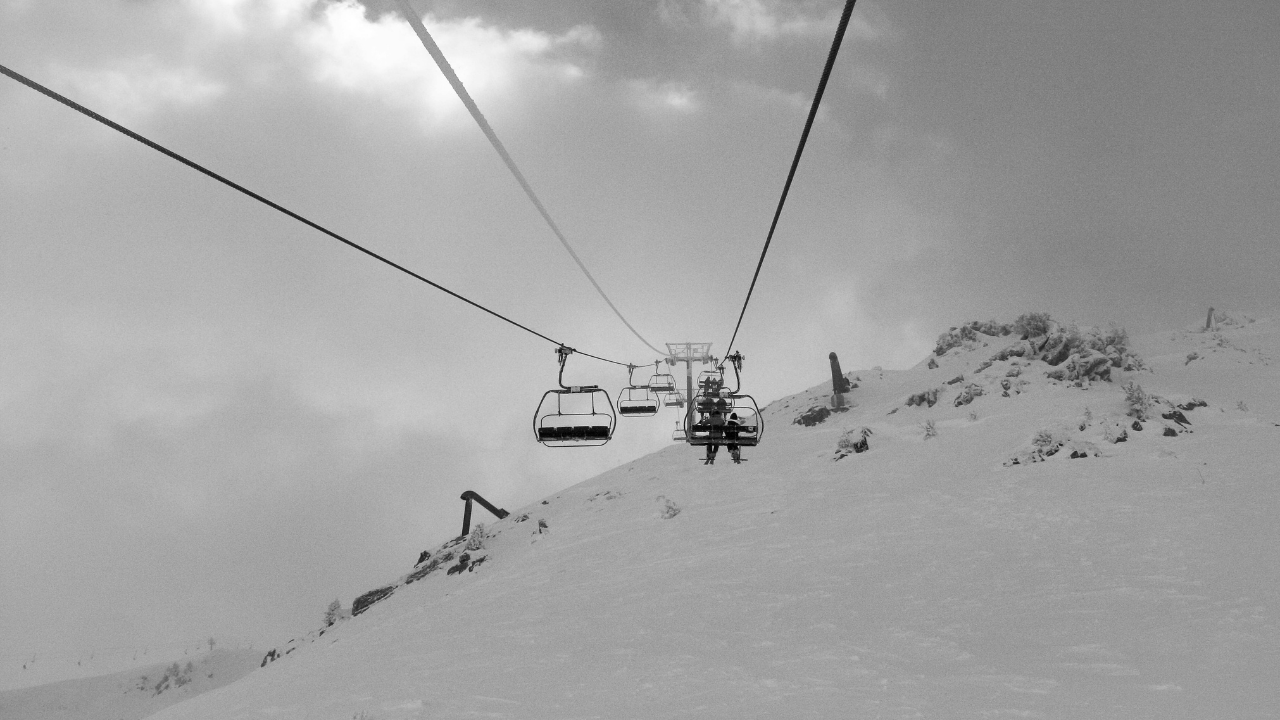
Chairlift — An open seat that scoops you up. Your instructor will teach you how to get on and off. It’s easier than it looks.
Button lift / Poma — A pole with a disc that you put between your legs. It drags you uphill. Slightly awkward the first time. You’ll get it by attempt three.
T-bar — Similar to a button lift but shared with one other person. Requires a bit of coordination.
Where you actually start — the nursery slope
Your first lessons happen on a nursery slope — a small, flat-ish area at the bottom of the mountain specifically for beginners. It usually has its own small drag lift. You won’t be anywhere near the main runs until your instructor decides you’re ready. There’s no pressure and no audience.
Chamonix specifically
The beginner areas in Chamonix are deliberately separate from the expert terrain. You won’t accidentally find yourself at the top of a black run. The learning zones are wide, well-maintained, and served by their own lifts. The mountain is big, but the bit you’ll be using is friendly, contained, and very well signposted.

Not sure what to expect? We run a free monthly webinar — Becca walks through the resort, the packages, a typical day, and takes questions live. No commitment required.
“I don’t know what I’d be doing all day.”
Here’s what a typical day looks like on a Road Trip Club ski trip.
7:30 – 8:30 · Breakfast
At the hotel. Eat properly — you’ll need the fuel. Bread, cheese, pastries, eggs, good coffee.
8:45 · Meet the group
Gear on, boots on, short walk or shuttle to the slopes.
9:00 – 12:00 · Lesson
Three hours with your instructor in a small group of fellow beginners. Structured, patient, progressive.
12:00 – 1:30 · Mountain lunch
At a mountain restaurant. Sit in the sun. Eat something warming. Rest your legs. This is one of the best parts of the day.
1:30 – 4:00 · Free skiing
Practice what you learned in the morning. Go at your own pace. Your guides are around if you want company or direction.
4:00 – 5:30 · Hotel & spa
Hot bath, sauna, stretching. Your legs will thank you. This isn’t optional luxury — it’s recovery.
6:30 · Dinner
At a hand-picked restaurant in Chamonix. Fondue, raclette, tartiflette, good wine. The food here is excellent.
10:00 · Bed
You’ll be tired. Genuinely, properly tired. Sleep comes easily in the mountains.
On après ski
It exists and some people enjoy it. It is not compulsory, it is not the point of the trip, and this is not a 19-year-old Interrail situation. If you want a beer after skiing, you can have a beer after skiing. If you want to go straight to the spa, do that.
There are also a couple of special evenings built into the trip. A wine and cheese evening is a highlight — local producers, proper Savoyard cheeses, and the kind of evening you wouldn’t find on your own.
And the Aiguille du Midi — a cable car that takes you to 3,842 metres. It’s not skiing, it’s sightseeing, and it’s one of the most spectacular things you can do in the Alps. The views from the top are extraordinary on a clear day.

“I’m not fit enough.”
The Worry
I haven’t been to the gym in months. I get out of breath going up stairs. I’m worried I’ll hold everyone back or not be able to keep up.
How It’s Handled
The trip is paced for people who are not athletes. Lessons include rest breaks. The daily schedule includes a long lunch and an afternoon spa session. Nobody is expected to ski for eight hours straight. Most people ski for about four to five hours total, with plenty of sitting down in between.
Skiing uses muscles you don’t normally use — particularly your thighs, glutes, and core. You will ache. Everyone aches. It doesn’t mean you’re unfit; it means you’re using your body in a new way.
If you want to prepare
- Walk — ideally hills. 30–60 minutes, three times a week. Builds the endurance you’ll actually need.
- Squats and lunges — the two exercises that most directly prepare your legs for skiing. Bodyweight is fine.
- Cycling — great for building thigh strength without impact.
- Swimming — whole-body fitness that also helps with breathing at altitude.
If you don’t have time for any of that: you’ll be fine. You’ll just ache a bit more.
“I don’t know what to pack.”
Staying warm is non-negotiable. You cannot learn to ski while you’re cold. Cold makes you tense, and tension makes you bad at skiing. The layering system is how you stay warm without overheating.
The Layering System
Base Layer (Thermal)
Sits against your skin. Merino wool or synthetic thermal. Wicks moisture away. Never cotton. Bring two sets.
Mid Layer (Insulation)
Traps warm air. Fleece or wool sweaters. Bulk without weight, breathable but insulating.
Outer Layer (Protection)
Keeps wind and snow off. Waterproof, windproof, but breathable. Worth the investment.
Full Packing Checklist
- Thermal base layers (top and bottom, two sets)
- Fleece or mid-layer insulation
- Waterproof ski jacket
- Waterproof ski trousers (salopettes)
- Gloves (two pairs — one thin liner, one insulated)
- Warm hat or beanie
- Goggles
- SPF50+ sun cream (the sun at altitude is fierce)
- Thermal ski socks (4+ pairs — not normal socks)
- Neck warmer or gaiter
- Ibuprofen (for the aches)
- Travel insurance (winter sports cover — non-negotiable)
- Valid passport
- Wrist guards (snowboarders)
- Padded shorts (optional but worth considering)

“I’ll be the only one who doesn’t know anyone.”
The Worry
Everyone else will already know each other. I’ll be the odd one out. I’ll spend a week eating dinner in awkward silence with strangers.
How It’s Handled
The majority of people on every trip don’t know anyone else when they arrive. That’s the point. The trips are designed for people who don’t have a skiing friendship group. You’re not joining someone else’s holiday — you’re all starting from the same place.
There’s a welcome dinner on the first evening — relaxed, no pressure, good food. By the end of it, you’ll know names and faces. By the end of your first lesson, you’ll have shared the experience of being equally terrible at something with three or four other people, and that creates a bond faster than any icebreaker exercise.
Nothing breaks the ice faster than falling over in the same lesson together.
Lesson groups, mountain lunches, and evening dinners are all communal. You’re never forced to socialise, but you’re never left alone either. The balance is deliberate.
If you’re booking as a couple
You might progress at different rates — that’s completely normal. One of you might take to it faster than the other. You might end up in different lesson groups. This is fine and expected. You’ll ski together during free time, eat together in the evenings, and have plenty of shared experiences. Different progression speeds don’t mean different holidays.
“What if something goes wrong?”
On injury
The honest answer: minor injuries happen. Bruises, the occasional tweaked knee, sore wrists (especially for snowboarders). Serious injuries are rare at beginner level because you’re not going fast and you’re on gentle terrain. Every resort has a medical centre on the mountain staffed by doctors who deal with ski injuries every day. If something happens, you’re looked after quickly and professionally.
This is why travel insurance with winter sports cover is non-negotiable. Medical treatment in France is excellent but not free for UK visitors. Your insurance handles the cost. Get it before you travel. No exceptions.
On anxiety
Chairlift anxiety is real and common. Some people find the height uncomfortable. Some don’t like the sensation of swinging in the wind. Your instructor knows this and will talk you through it. There are also alternative routes down from most areas that don’t require chairlifts — gondolas (enclosed cabins) are available in most resorts including Chamonix.
If you feel genuinely anxious on the mountain, tell your instructor or your guide. They will not judge you. They will find a solution. Nobody is going to leave you at the top of something you can’t handle.
On simply not enjoying it
It’s rare, but it’s possible. Some people try skiing and discover it’s not for them. If that happens, the trip can be adapted. Chamonix is a beautiful town with plenty to do off the mountain — walking, shopping, cafes, the spa, the Aiguille du Midi cable car. A ski trip to Chamonix is worth it even if you decide skiing isn’t your thing. But most people don’t decide that. Most people discover they love it far more than they expected to.

“What will I actually be like at the end?”
Here’s the realistic progression for a complete beginner.
Day 1 · Arrival
Travel, settle in, equipment fitting, welcome dinner. No skiing today — just getting your bearings and meeting the group.
Day 2 · Nursery slope basics
How to put on skis. How to stand. How to move without sliding away. How to stop. How to fall safely. How to get up. By the end of the day, you’re sliding and stopping on a very gentle slope. It doesn’t feel like skiing yet. It will.
Day 3 · The click
Something changes. Your body stops fighting and starts cooperating. You start linking turns. You feel, for the first time, what skiing actually feels like when it works. This is the day most people get hooked.
Day 4 · Real runs
You’re on green and easy blue runs. Proper slopes, proper views, proper skiing. You’re still concentrating hard, but you’re doing it. The mountain opens up.
Day 5+ · It starts being fun
Concentration gives way to enjoyment. You start noticing the scenery instead of staring at your ski tips. You get faster without meaning to. You start to understand why people do this every year.
Which trip length is right for you?
4-Day Snow Escape
Fri – Mon · 2 lessons
A taster. Enough to find out if skiing is for you without committing a full week. You’ll learn the basics and get a real feel for mountain life. Perfect if you’re curious but cautious.
5-Day Mountain Experience
Mon – Fri · 3 lessons
The most popular choice for first-timers. Three lessons gives you enough time for the “click” to happen. You’ll come home able to ski easy runs confidently and you’ll know whether you want to come back.
7-Day Alpine Adventure
Sat – Fri · 5 lessons · Spa included
The full experience. Five lessons takes you from complete beginner to confident on blue runs. You’ll come home a skier, not someone who tried skiing once. Includes spa access throughout for proper recovery.
The questions people think are too basic
Yes. Most goggles are designed to fit over glasses (they’re called OTG — Over The Glasses). If your frames are very wide, mention it when you hire your goggles and they’ll find a pair that fits. Contact lenses also work well.
Travel light. Phone, sun cream, a small amount of cash, maybe a lip balm. Ski jackets have zipped pockets for a reason. Leave anything valuable at the hotel. Lockers are available at the base of most lifts if you need them.
Yes. During free skiing, you stop whenever you like. During lessons, your instructor will build in rest breaks. If you need to stop outside of those, just say so. Nobody will mind.
Every mountain restaurant has toilets. There are also facilities at the base and top of most major lifts. Your instructor will know where the nearest ones are. It’s a very common question — you’re not the first person to ask.
Chamonix has excellent snow-making facilities and the season is reliable from December through April. Low snow years are rare, and even then, the higher slopes and north-facing runs hold snow well. You’ll have snow.
In Chamonix, yes. This is France. Mountain restaurants serve proper food — tartiflette, croque monsieurs, soups, salads, steak. It’s not service station food. Some of the best meals of the trip happen on the mountain.
No. English is widely spoken in Chamonix, especially in ski schools, hotels, and restaurants. Saying “bonjour” and “merci” goes a long way and is appreciated, but you won’t struggle with the language barrier.
You leave them at the ski hire shop or in a ski locker near the slopes. You don’t carry them back to the hotel. They’re stored securely and you pick them up each morning.
Yes, in most cases. Talk to your guide and the hire shop. Equipment can be swapped. Lesson groups may differ, but it’s usually straightforward to switch if you decide you’d rather try the other one.
Not if you layer properly. The layering system (base, mid, outer) works. The most common mistake is wearing too much and overheating during lessons, then getting cold when you stop. Dress so you can add and remove layers. And invest in good gloves — cold hands ruin everything.
Ready to Make It Real?
The Alps are calling. The logistics are simple. The cost is reasonable. Being “good enough” just means showing up willing to try.
4-Day Snow Escape
Fri–Mon · 2 lessons
5-Day Mountain Experience
Mon–Fri · 3 lessons
7-Day Alpine Adventure
Sat–Fri · 5 lessons · Spa included
£199 holds your place. Balance due 12 weeks before travel.
Early bird: Book before 30 June 2026 for £200 off and the lower deposit.
